
Plastic Carry Handles for Packaging Heavy Duty Reliable Solutions
When you struggle to balance multiple shopping bags on your wrist, a plastic carry handle for packaging clips onto your box or bundle, creating a secure, comfortable grip. This simple attachment distributes weight evenly, reducing strain on your hands and making heavy loads easier to transport. You simply snap the handle into the pre-cut slots of your packaging, then lift with one hand—no struggling with awkward edges or cutting off circulation to your fingers.
Why Carry Handles Are Transforming Packaging Design
Carry handles are transforming packaging design by fundamentally altering how consumers interact with bulk products. A plastic carry handle for packaging solves the ergonomic problem of managing heavy containers, such as large detergent jugs or water bottles. By integrating a rigid loop into the package, the handle distributes weight away from the container walls, reducing the risk of tearing or tipping. This shift allows designers to use thinner materials for the main body while relying on the handle’s structural strength to bear the load. Furthermore, the handle’s built-in grip improves control and portability, eliminating the need for an outer box or secondary bag. This integration directly increases user convenience for everyday lifting and pouring tasks, making large-format packaging more practical for home use without adding bulk to the package profile.
Consumer Convenience as a Market Differentiator
In packaging design, the plastic carry handle elevates consumer convenience as a market differentiator by directly improving the user’s physical interaction with a product. A well-placed handle transforms a bulky or heavy item into a single-handed, balanced load, reducing strain and freeing the other hand for tasks like unlocking a door or holding a phone. This practical ease of transport, especially for large containers like water jugs or pet food bags, creates a tangible ergonomic advantage that competing products without handles lack.
- Enables one-handed carrying, allowing multitasking during transit.
- Reduces grip fatigue and risk of dropping heavy or awkwardly shaped packages.
- Simplifies lifting from low shelves or car trunks without needing assistance.
- Eliminates the need for secondary carrying aids, like bags or carts.
Reducing Product Damage Through Better Ergonomics
Better ergonomics directly cuts product damage by replacing awkward, unbalanced carries with a stable, centered handhold. A well-placed plastic handle lets the weight hang naturally below the grip, eliminating the tilting and swinging that cause boxes to bump walls or drop. This control prevents stress on container seams and corners, keeping your items secure from warehouse to doorstep. Even a slight improvement in hand position reduces accidental impacts because the carrier’s fingers and wrist stay relaxed, not fighting the load. Stability here means fewer bruised goods and less hassle.
Better ergonomics means a centered, stable grip that stops tilting and bumping, directly lowering product damage.
How Easy-to-Carry Designs Boost Brand Loyalty
Easy-to-carry plastic handles transform a product’s utility into a frictionless experience, directly strengthening brand loyalty. When a handle eliminates the struggle of transporting a bulky package, the user subconsciously associates the brand with convenience-driven problem solving. This positive tactile interaction creates an emotional anchor, making the customer more likely to choose that same brand again. A practical carry design also reduces physical fatigue, which fosters a sense of thoughtful care from the manufacturer. Over repeated purchases, this small ergonomic advantage compounds into a reliable expectation, effectively making the handle a silent ambassador for the brand’s commitment to the user’s daily comfort.
Key Materials Used in Modern Handle Solutions
Modern plastic carry handles for packaging predominantly use high-density polyethylene (HDPE) for its outstanding rigidity and impact resistance, ensuring reliable support for heavy loads. Polypropylene (PP) is favored for flexible strap handles due to its fatigue resistance and hinge performance. Why is HDPE preferred for rigid handles? It offers superior tensile strength and chemical stability against common packaging contaminants. Recycled post-consumer HDPE is increasingly selected for sustainable solutions without compromising load-bearing integrity, while thermoplastic elastomers (TPE) provide ergonomic grip overlays that prevent slippage during transport.

Polypropylene and Polyethylene: The Industry Standards
Polypropylene and Polyethylene are the industry standards for plastic carry handle for packaging due to their distinct physical properties. Polypropylene delivers superior rigidity and fatigue resistance, making it ideal for heavier loads where the handle must not flex. Polyethylene, valued for its tensile strength and flexibility, excels in snap-fit or die-cut designs that require a soft yet durable grip against the package surface.
- Polypropylene handles maintain shape under repeated stress and high temperatures.
- Polyethylene provides excellent impact resistance for cold-temperature distribution.
- Both polymers are chemically inert, preventing reactions with packaged goods.
Recycled and Biodegradable Alternatives for Eco-Conscious Brands
Eco-conscious brands now select carry handles from post-consumer recycled (PCR) plastics, diverting waste from landfills while maintaining handle strength. For biodegradable options, handles made from compostable bioplastics like PLA or PHA break down in industrial facilities. The transition requires attention to material compatibility: first, verify the handle’s moisture resistance if used with chilled goods; second, confirm the bioplastic’s degradation timeframe aligns with disposal infrastructure; third, test the recycled material’s tensile load to avoid handle failure.
Durability vs. Flexibility: Choosing the Right Resin
When choosing a resin for your plastic carry handle, you’re really balancing durability versus flexibility for the specific load. For heavy or rigid packaging like large jugs, a high-density polyethylene or polypropylene offers superior strength and resists cracking under stress. However, for lighter boxes or items with awkward shapes, a more flexible resin like a low-density polyethylene prevents the handle from snapping during quick movements or allows it to bend around corners without breaking. Overly stiff handles can shatter in cold temps, while too-soft ones might stretch out permanently. Test your product’s weight and typical handling scenario—a single resin rarely works for both extremes.
Anatomy of a Reliable Carry Handle System
A reliable carry handle system hinges on three integrated anatomical features. The stress distribution geometry of the handle arm must taper smoothly from the grip to the attachment point, preventing fracture under load. The hinge’s living pivot demands a precise radius and material thickness to allow repeated flexing without fatigue, while the reinforced load zone where the handle meets the container wall uses interlocking ribs to transfer force. Finally, the ergonomic contour of the grip surface must incorporate tactile ridges that prevent slippage, ensuring the entire system works as a single, dynamic unit during transport.
Attachment Methods: Snap-Fit, Weld, and Adhesive Options
Choosing the right attachment method is key to a reliable carry handle. Snap-fit mechanisms offer tool-free assembly, clicking the handle securely into place, but require precise mold design to avoid brittleness. Welding, often ultrasonic or vibration, fuses the handle to the container for a permanent, robust bond, ideal for heavy loads. Adhesive options provide a simple, fast solution for varied materials, though surface preparation is critical to prevent lifting. A snap-fit might loosen under repeated stress, where a weld provides unmatched durability.
| Method | Key Strength | Best Use Case |
|---|---|---|
| Snap-Fit | No tools needed | Light-to-medium boxes |
| Weld | Permanent & strong | Heavy-duty pails |
| Adhesive | Quick application | Dissimilar plastics |
Weight Capacity and Stress Distribution Principles
The weight capacity of a plastic carry handle hinges on how effectively its geometry distributes the tensile load applied by the user’s hand. A handle rated for, say, 15 kg must channel that force from the attachment points—typically reinforced gussets or snap-fit zones—into a broad, curved gripping surface to avoid localized stress concentrations. If the radius of the grip is too tight, the stress concentration factor spikes, potentially fracturing the plastic. The cross-section should be thickest where bending moment is highest, usually the midpoint of the span. Without such distribution, the handle fails not at the load limit, but at a weak point.
Q: Does making the handle thicker always improve weight capacity?
A: Not necessarily; excessive thickness can create differential cooling stresses during molding, actually reducing fatigue life.
Handle Thickness, Width, and Grip Texture Factors
Handle thickness must be optimized to prevent flexing under load while avoiding excessive material use that causes discomfort during prolonged carrying. Width directly influences weight distribution across the palm; a wider profile reduces pressure points but must align with hand anthropometry to ensure a secure grasp. Grip texture is engineered with fine ribbing or raised dots to enhance friction in wet or oily conditions, preventing slippage without creating abrasive surfaces. These three factors collectively define ergonomic carrying performance, ensuring the handle transmits forces efficiently from package to hand.
Handle thickness, width, and grip texture must be balanced to distribute load, prevent slippage, and maintain comfort during transport.
Matching Handle Types to Packaging Formats

For a six-pack of bottled beverages, the matching handle types to packaging formats begins with the ring carrier, where the plastic carry handle for packaging must flex to snap over each neck yet remain rigid enough to hold the weight during a shopping walk. When you move to a corrugated box holding bulk dry goods, the same logic shifts: a die-cut bail handle or a side-grip insert is essential, as the palm supports the load through a punched slot rather than individual product collars. The plastic carry handle for packaging thus changes its shape—from a stretchable loop to a rigid panel—based on whether the format is a cluster of bottles or a solid case.
Die-Cut Handles for Cartons and Boxes
When matching handle types to packaging formats, die-cut handles for cartons and boxes offer a built-in carrying solution without needing extra plastic attachments. These handles are cut directly into the corrugated board or paperboard, creating a recessed grip that keeps the package surface smooth for easy stacking and shipping. They work best for lightweight or moderately loaded boxes, like retail product cartons or mailer boxes, where the handle’s strength matches the board’s thickness. A reinforced panel around the cut-out prevents tearing under typical use.
- Perfect for small to mid-sized e-commerce cartons and gift box formats.
- Eliminates the need for a separate plastic handle, reducing material waste.
- Provides a flush surface for labeling and printing without protruding hardware.
- Works best with double-wall corrugated board to handle moderate loads.
Molded Handles for Liquid Containers and Buckets
For liquid containers and buckets, molded handles are integrated directly into the plastic body, creating a seamless, leak-resistant unit. This design eliminates attachment points that could fail under the weight of heavy liquids, ensuring secure carrying for heavy-duty liquid packaging. The handle’s ergonomic contour distributes load across the palm, reducing strain when transporting filled buckets up to 20 liters.
- Prevents handle detachment during wet or slippery conditions.
- Supports balanced pouring by integrating the handle opposite the spout.
- Allows one-handed carrying via a hollow, grip-friendly channel.
- Resists chemical degradation from stored solvents or oils.
Injection-Molded vs. Thermoformed Handle Profiles
Injection-molded handle profiles offer superior dimensional precision and rigidity, making them ideal for heavier or unbalanced loads where structural handle performance is critical. Thermoformed profiles, conversely, excel in large-format packaging due to their lighter weight and lower tooling costs, though they sacrifice fine detail and snap-fit precision. Choose injection molding when you need consistent, robust attachment points and a premium feel; opt for thermoforming when speed-to-market and cost-per-unit on oversized containers outweigh the need for intricate geometric features. The decision hinges entirely on load demands versus production volume.
Customization Opportunities for Brand Identity
A plastic carry handle is a blank canvas for your brand. You can imprint your logo or tagline directly onto the handle using pad printing or hot stamping, making every carry a moment of recognition. Beyond color matching your brand palette, consider the handle’s texture and shape as a subtle differentiator—a smooth, ergonomic curve can feel more premium than a simple straight bar. Even the attachment clip, if custom-molded with your brand’s initial, becomes a tiny, tactile signature. This transforms a purely functional piece into a consistent, handheld brand touchpoint that customers interact with every time they lift the package.

Color Matching and Surface Finish Choices
Getting the color just right on your plastic carry handle is a game-changer for brand recognition. You can match exact Pantone or RGB codes, so the handle seamlessly blends with your packaging artwork. For surface finish, choose between a high-gloss custom surface finish for a sleek, premium feel or a matte texture to hide fingerprints and give a modern look. Adding subtle sparkle with metallic flakes or a soft-touch coating further elevates the unboxing experience.
- Match specific Pantone or brand color codes for a cohesive look
- Select a glossy finish to make the handle pop visually
- Choose a matte finish to reduce glare and smudges
- Apply metallic or pearlescent effects for extra brand flair
Embossed Logos, Textures, and Ergonomic Contours
Incorporating embossed brand textures into a plastic carry handle transforms it from a functional component into a tactile brand asset. Raised logos on the grip surface provide a premium feel while ensuring geometric contours fit the hand naturally, reducing pressure points during carrying. A diamond-plate or micro-dot texture adds anti-slip security without compromising the handle’s smooth release from the mold. Ergonomic contours, shaped to match finger curvature, distribute load evenly and discourage improper gripping. This fusion of form and function means your brand is literally felt with every use, creating lasting subconscious recognition.
- Raised logos create a permanent, wear-resistant brand mark that remains legible after repeated handling.
- Textured surfaces (e.g., knurling or wave patterns) improve grip wet or dry without adding secondary materials.
- Contoured thumb rests or finger grooves guide a natural, comfortable carry position.
- Embossed patterns can mask minor handling scuffs, keeping handles looking pristine longer.
Custom Shapes That Reinforce Product Messaging
A plastic carry handle’s silhouette can be molded into a brand-recognizable icon, such as a logo shape or product outline, turning a functional grab-point into a silent sales pitch. For a premium beverage, a bottle-contour handle instantly signals the product inside. For a pet food brand, a paw-print cutout reinforces messaging around animal care. This geometric customization ensures the handle communicates core values—like eco-friendliness via a leaf shape or durability via a gear profile—before a customer reads a single word.
Manufacturing Processes and Cost Implications
The main manufacturing process for plastic carry handles is injection molding, where molten polymer is forced into a steel or aluminum mold. This method offers high speed and consistency, with cycle times often under 30 seconds per handle. The primary cost driver is the initial mold tooling—typically $5,000–$30,000 depending on cavity count and complexity. However, per-unit costs drop sharply at high volumes (often below $0.05 each) due to fast cycle times and minimal material waste. Additives like UV stabilizers or flex modifiers can increase raw material cost by 10–20%. Secondary operations, such as punching for bag attachment or pad printing logos, add labor and handling costs.
A single-cavity mold is cheaper upfront but yields slower production, while multi-cavity molds demand higher investment but slash per-unit costs by running multiple handles per cycle.
Using recycled polypropylene reduces material expense by 15–30%, though it may require slower cycle times to avoid defects.
Injection Molding: High Volume, Precision Tolerances
For plastic carry handles, high-volume precision injection molding delivers unmatched repeatability at scale. Each cycle produces handles with tolerances down to ±0.1 mm, ensuring perfect fitment on packaging without warping or flashing. The hardened steel tooling maintains this accuracy over millions of cycles, eliminating costly secondary operations. This process directly reduces per-unit cost via sub-30-second cycle times. While tooling investment is higher than alternative methods, the unchanging part quality and zero-defect capability at high outputs justify the initial expense for mass production.
| Aspect | Benefit for Plastic Carry Handles |
|---|---|
| Repeatability | ±0.1 mm tolerance across millions of handles |
| Cycle Speed | 20–30 seconds per shot, enabling >100 handles per minute |
| Tool Life | Hardened steel molds endure 1M+ cycles without precision loss |
Extrusion and Die-Cutting for Flexible Packaging
Extrusion forms the plastic film into a continuous web, which is then fed into a die-cutting station that punches out the carry handle shape and any perforations for tear-open features. The die tool’s precision directly affects the handle’s edge quality and dimensional consistency, impacting sealing integrity downstream. To optimize cost, tooling is often designed for high-speed, multi-cavity cutting to maximize material yield from the web. Rotary die-cutting is preferred for high-volume runs as it maintains tighter tolerances than flatbed systems, reducing scrap from misaligned cuts.
Extrusion creates the film; die-cutting precisely forms the handle, with rotary dies minimizing waste through high-speed, multi-cavity operation.
Automated Assembly vs. Manual Attachment Costs
For plastic carry handles on packaging, automated assembly drastically reduces per-unit labor costs when production volumes are high, often cutting attachment expenses by 30-50% compared to manual installation. However, manual attachment remains cost-justified for short runs or complex packaging shapes where robotic fixturing is prohibitive. The breakeven point typically falls between 50,000 and 100,000 units; below that, manual labor avoids the capital outlay for automation. Above that threshold, automated assembly reduces ongoing cost per handle significantly, while also minimizing error rates from inconsistent hand-fits.
Automated assembly yields lower per-unit cost at scale due to speed and consistency, whereas manual attachment avoids high upfront equipment costs for small batches of plastic carry handles.
Eco-Friendly Innovations in Handle Production
Eco-friendly innovations in handle production now utilize post-consumer recycled polyethylene (PCR) to create plastic carry handles without compromising tensile strength. Some manufacturers integrate biobased polymers derived from sugarcane or corn starch, which can be composted in industrial facilities. Design improvements include hollow-core or ribbed profiles that reduce material weight by up to 40% while maintaining ergonomic grip. Water-based adhesives and snap-fit joints eliminate solvent glues, simplifying recycling. Biodegradable plastic carry handles are also emerging, using additives that trigger degradation in landfill conditions after the handle’s intended single-use cycle. These shifts allow packaging to maintain its functional reliability while lowering virgin plastic dependency.
Post-Consumer Recycled Content in Handle Components

Post-consumer recycled (PCR) content in handle components directly reduces virgin plastic demand by reclaiming materials from discarded bottles and containers. For plastic carry handles for packaging, PCR is mechanically reprocessed into durable polypropylene or polyethylene granules, maintaining tensile strength essential for load-bearing applications. PCR-integrated handle components often require tailored mold flow adjustments to account for variable melt indexes, ensuring consistent wall thickness without brittleness. The recycled material typically undergoes multiple wash cycles and decontamination to remove adhesives and residues, yielding a finished component that meets food-safe packaging standards.
- Reprocessed PCR handle pellets must pass impact resistance tests at -20°C to prevent cold-weather cracking.
- Color variation from mixed post-consumer sources is managed via carbon-black masterbatch, avoiding opaque dyes.
- Thin-wall handle designs require PCR with a melt flow index above 10 g/10min to fill molds without flashing.
- PCR content levels up to 30% retain original hinge-flex fatigue limits for snap-on carrier loops.
Lightweighting Strategies to Reduce Material Usage
Structural ribbing and lattice designs drastically cut plastic weight in carry handles without sacrificing load capacity, as strategic hollow channels replace solid bulk. By integrating tapered geometries and living hinges, engineers concentrate material only at stress points, reducing overall polymer demand by up to forty percent. This targeted removal of non-essential mass maintains ergonomics while shrinking the product’s carbon footprint from raw handle for box extraction through disposal.
- Implementing cross-sectional coring removes up to 30% of material in grip areas while preserving tensile strength.
- Using gas-assist injection molding creates internal voids that lighten handles without compromising structural integrity.
- Transitioning to polypropylene blends allows thinner wall sections through improved flow characteristics during molding.
Designing for Easy Separation During Recycling
Designing for easy separation during recycling requires the plastic carry handle to detach cleanly from the primary packaging without tools or tearing. This is achieved by integrating snap-fit breakpoints at the connection points. A logical sequence guides the user:
- Engineer a perforated or thinned neck between the handle and container.
- Ensure the material at this joint is weaker than both handle and package, preventing fragmentation.
- Orient the break line so a simple twist or pull forces a clean snap.
This singular focus on breakaway geometry avoids mixed-material contamination, ensuring each component enters the correct recycling stream without residue or sharp edges.
Safety and Regulatory Compliance Essentials
The warehouse worker grunted, hoisting the bulk box by its plastic carry handle for packaging. The handle held firm, distributing the weight evenly because it had been tested to meet strict load-capacity standards, ensuring no sudden breakage that could cause injuries or product spills. This same handle was molded without sharp edges, compliant with safety regulations to prevent cuts during transport. Its material had been screened for prohibited phthalates and BPA, essential for avoiding chemical leaching onto the packaged goods. The entire design avoided intricate crevices where bacteria could harbor, simplifying sanitation and meeting food-contact safety norms. For the worker, this meant every lift was secure; for the company, it meant avoiding costly recalls tied to handle failure.
FDA and EU Directives for Food Contact Applications
When using a plastic carry handle for food packaging, you need to check that it meets FDA and EU Directives for Food Contact Applications, which set strict limits on chemical migration. For the US market, the handle must comply with FDA 21 CFR regulations to ensure no harmful substances transfer to food. In the EU, Regulation (EC) No 1935/2004 requires a Declaration of Compliance (DoC) proving the handle won’t alter food’s taste or safety. Both rules demand migration testing, especially for handles touching wet or fatty foods.
Q: Do FDA and EU Directives apply if the handle only touches the outer packaging?
A: Yes—even indirect contact can transfer substances during stacking or sweating, so both FDA and EU rules still require compliance.
Load-Testing Standards for Retail Safety
Load-testing standards for retail safety ensure plastic carry handles withstand real-world stress without failure. These protocols simulate sudden jerks, prolonged suspension, and weight shifts by applying static and dynamic loads exceeding the intended fill weight. Handles must survive a minimum hold time, typically 60 seconds, under a force calculated from package dimensions and product density, without cracking or detaching from the seal. Dynamic drop tests from standard shelf heights verify impact resistance. Regular batch sampling confirms consistency, preventing handle snap during customer carry.
- Static load test at 1.5x maximum package weight for one minute
- Dynamic drop test from 12 inches onto a steel plate
- Cyclic fatigue test simulating repeated lifting and carrying motions
- Tensile test at the handle-to-package attachment point
Sharp Edges and Pinch-Point Prevention Guidelines
Sharp edges and pinch-point prevention are critical for plastic carry handle safety during use. Handles must undergo post-mold deburring to eliminate injection flash that creates laceration risks. All edges should be radiused to a minimum of 0.5mm to avoid cutting users’ fingers. The hinge area, where the handle meets the container, requires a smooth transition to prevent entrapment of skin or clothing. No protruding gate vestiges or sharp corners are permissible. For fold-down handles, the recess cavity must have chamfered inner edges to avoid pinch wounds when the handle snaps back into position.
Guidelines require fully deburred, radiused edges and chamfered hinge cavities to eliminate laceration and entrapment hazards from the handle and its attachment points.
Future Trends Shaping the Handling Experience
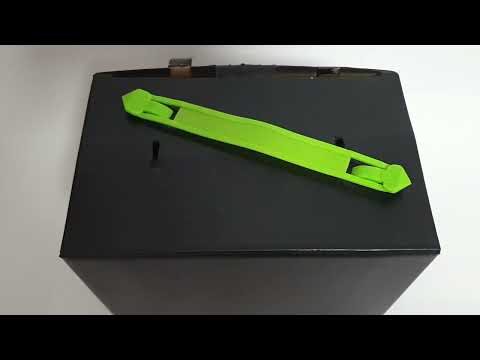
The future of the plastic carry handle for packaging will focus on adaptive ergonomics, where handles dynamically conform to a user’s grip for a no-slip, comfortable carry, even with heavy loads. Expect to see integrated tactile feedback—small ridges or smart-textured surfaces that visually and physically indicate the handle’s load limit without a printed label. Handles will also pivot and lock into multiple angles, letting you switch from a vertical to a horizontal carry position as needed, dramatically reducing wrist strain. These next-gen features turn a simple handle into an intuitive, responsive part of the packaging, making the carrying experience feel almost effortless.
Smart Handles with RFID or QR Code Integration
For plastic carry handles, RFID or QR code integration transforms the handle into a data portal. A handle-embedded QR code, when scanned, directly links to product origin, recycling instructions, or batch-specific recycling compatibility. RFID tags enable instant, contactless authentication of a handle’s material composition during automated sorting. A user scanning a handle’s QR code could verify if the handle is made from post-consumer recycled plastic. This integration eliminates the need for separate labels, embedding traceability directly into the handling point for streamlined logistical verification.
| Feature | QR Code on Handle | RFID Tag in Handle |
|---|---|---|
| Data access method | Optical scan (camera) | Radio frequency scan |
| Primary user action | Line-of-sight scanning | Proximity reading |
| Information density | Static or dynamic URL | Unique identifier or data |
Biomimetic Grips Inspired by Natural Textures
Future handles will mimic nature, using biomimetic grip textures inspired by things like shark skin or tree bark to improve comfort. These patterns reduce hand fatigue during long carries by spreading pressure evenly, while microscopic ridges boost traction even with wet or greasy fingers. The result is a handle that feels more secure and organic in your hand, without adding bulk or complexity to the plastic design.
- Shark-skin inspired grooves channel moisture away, preventing slips.
- Leaf-like veins on the surface increase friction without sharp edges.
- Honeycomb cellular patterns distribute weight to soften pressure points.
Disappearing Handles: Dissolvable or Compact Designs
Dissolvable or compact handle designs eliminate post-use bulk by integrating the carry mechanism into the package footprint. Water-soluble polyvinyl alcohol handles activate only upon wetting, then fragment harmlessly during recycling. Compact designs collapse rigid handles into recessed channels or fold flat against the pack surface, allowing nested stacking without protrusions. These solutions sever the user’s reliance on permanent structural protrusions. A dissolvable handle disappears chemically; a compact one disappears spatially. Both preserve grip functionality during transport while erasing the handle from the waste stream, thereby simplifying disposal and reprocessing workflows.
| Aspect | Dissolvable | Compact |
| Mechanism | Water-initiated depolymerization | Mechanical folding or nesting |
| User action | Exposure to moisture | Manual snap/fold |
| Waste state | Non-existent (dissolved) | Flat or recessed |